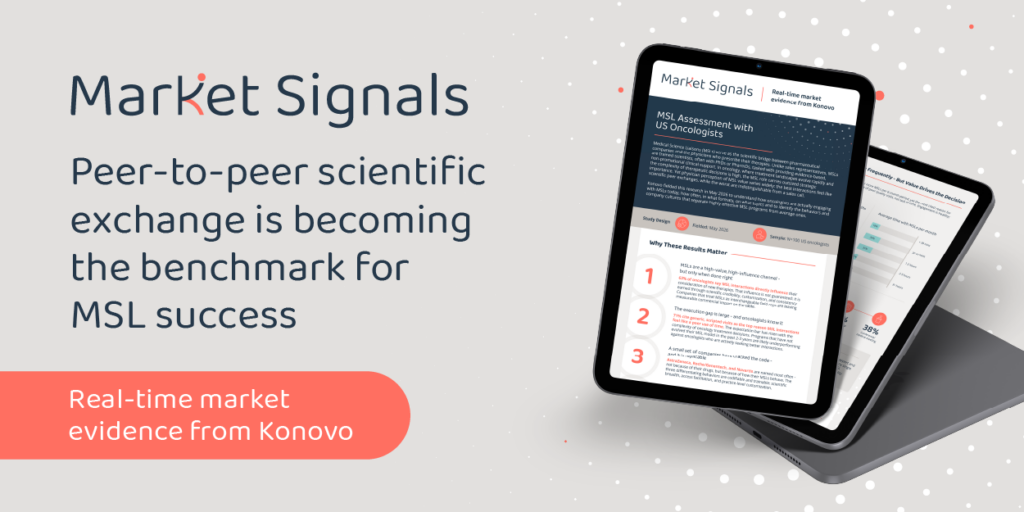

New survey data reveals what 100 oncologists actually want from MSL interactions — and what makes them tune out.
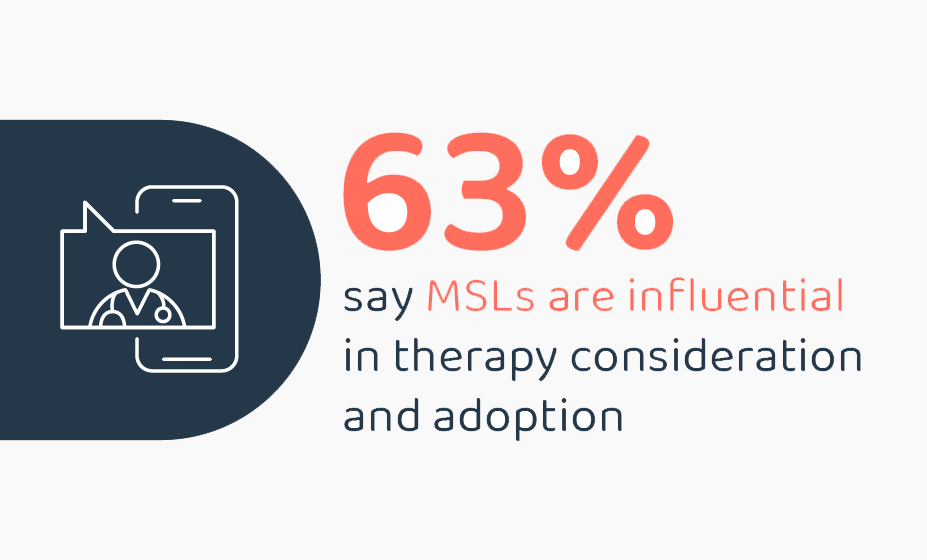
63% percent of oncologists say Medical Science Liaisons (MSLs) influence their consideration or adoption of new therapies. Yet 71% say generic or scripted visits are the single biggest reason an MSL interaction feels like a poor use of their time. That tension sits at the heart of modern medical affairs.
To understand it better, Konovo surveyed 100 US oncologists about their real experiences with MSLs. The findings are a useful reality-check for any team thinking about how to make field engagement more effective. Here are a few takeaways.
Credibility beats frequency.
Oncologists were clear that the value of an MSL interaction has little to do with how often they meet. What matters is the depth and relevance of the scientific exchange. A single well-prepared, genuinely insightful conversation outweighs a string of routine check-ins. MSLs who bring something new to the table, rather than repeating what an oncologist already knows, are the ones who earn real attention.
Relevance is everything, and the data proves it.
The fastest way to lose an oncologist is to show up generic. 71% cite scripted, one-size-fits-all visits as the top reason an interaction is a poor use of time. So what do they want to talk about? The most valued topics are clinical trial updates (76%), real-world evidence (69%), and competitive landscape discussions (58%). For medical affairs leaders, that is a clear, actionable blueprint for what earns a seat at the table.
MSLs influence treatment decisions more than many people realize.
This is the headline worth sitting with. 63% of oncologists say MSL interactions influence their consideration and adoption of new therapies. That makes field medical one of the most commercially significant functions in the organization, and it underscores why the quality of these engagements matters so much more than the quantity. When the science is delivered well, it genuinely shapes how oncologists interpret data and make treatment decisions.
What the best companies do differently.
Oncologists most frequently named AstraZeneca, Roche/Genentech, Merck, and Novartis as having the leading MSL teams. The reasons had little to do with brand strength and everything to do with behavior: genuine scientific depth, conversations tailored to the oncologist’s practice, balanced and objective discussion of the data, and consistent follow-through after the meeting. The lesson is encouraging for any team, because these are learnable behaviors, not advantages reserved for the biggest names.
Trust is fragile, and it compounds.
The survey surfaced a consistent set of behaviors that build trust over time, and an equally predictable set that erodes it. Scientific balance, transparency about limitations, and a willingness to say “I don’t know, but I’ll find out” all strengthen the relationship. Overselling or dodging hard questions does the opposite, and the damage tends to linger.
These findings are only the beginning.
Read the full Market Signal to see what 100 US oncologists said separates the industry’s best MSL teams from the rest, and why those differences matter for scientific engagement, therapy adoption, and medical affairs strategy.
Explore the MSL Market Signal report here.